Sunday, February 21, 2016


I read the following quote by Dickens that just tickled me. His descriptions of people are so vivid you can nearly touch them.

  "In certain quarters of the city and its neighborhood, Mr. Jobling was a very popular character. He had a portentously sagacious chin, and a pompous voice, with a rich huskiness in some of its tones that went directly to the heart, like a ray of light shining through the ruddy medium of choice old burgundy.
His neckerchief and shirt frill were ever of the whitest, his clothes of the blackest and sleekest, his gold watch-chain of the heaviest, and his seal of the largest. His boots, which were always of he brightest, creaked as he walked. Perhaps he could shake his head, rub his hands, or warm himself before a fire better than any man alive; and he had a peculiar way of smacking his lips and saying, "Ah!" at intervals while patients detailed their symptoms, which inspired great confidence. It seemed to express, "I know what you're going to say better than you do; but go on, go on." As he talked on all occasions, whether he had anything to say or not, it was unanimously observed of him that he was "full of anecdote," and his experience and profit from it were considered for the same reason, to be something much too extensive for description. His female patients could never praise him too highly; and the coldest of his male admirers would always say this for him to their friends, "that whatever Jobling's professional skill might be (and it could not be denied that he had a very high reputation) he was one of the most comfortable fellows you ever saw in your life. Dickens.

Thursday, February 18, 2016


  In Galations 5:22 the Bible lists 9 fruit of the Spirit. This is the world of emotions the Holy Spirit brings us to in the kingdom of God. When we close the door to faith in Christ, we are in darkness, and some are in darker places than others.  
Jesus is the Light of the world, and he calls, draws and ushers us into light. For those who have had adverse childhood experiences, and suffered under parents that may have been addicts, abusive, incestuous or simply neglected their child: or have been in combat or domestic violence and oppression, this darkness can haunt you all the days of your life if you resist the light, and many do resist for countless reasons. 
I have listed the nine fruits of the Spirit and underneath them, I listed the emotions some feel in the kingdom of darkness. It is quite a contrast

Love -
Some people who suffered childhood trauma grow up and Fall in love, a little too fast and deep. When traumatized people fall in love they often idealize their partner; put them on a pedestal, profess a rapid and deep connection, give of themselves fully, push for premature commitments. It may feel like the  "love of a lifetime."
In time, this idealization evolves into a devaluation of the partner when the partner does not live up to the unrealistic expectations.
When this happens, they can become angry, resentful, abusive, and even vindictive.

Joy -
Frequent feelings of being down, miserable, and or hopeless; difficulty recovering from such moods; pessimism about the future; pervasive shame; feeling of inferior self-worth; thoughts of  suicidal behavior.

 Peace -
Anxiousness: Intense feelings of nervousness, tenseness, or panic, often in reaction to interpersonal stresses; worry about the negative effects of past unpleasant experiences and future negative possibilities; feeling fearful, apprehensive, or threatened by uncertainty; fears of falling apart or losing control.

Patience -
Impulsive, acting on the spur of the moment in response to immediate stimuli; acting on a momentary basis without a plan or consideration of outcomes; difficulty establishing or following plans; a sense of urgency and self-harming behavior under emotional distress.

Kindness -
Hostility:  Persistent or frequent angry feelings; anger or irritability in response to minor slights and insults. * Inappropriate anger, sometimes escalating into physical confrontations

Goodness -
People have an unstable sense of who they are. That is, their self-image or sense of self often rapidly changes. They typically view themselves as evil or bad, and sometimes they may feel as if they don't exist at all. This unstable self-image can lead to frequent changes in jobs, friendships, goals, values and gender identity.

Faithfulness -
They may form an immediate attachment and idealize the other person, but when a slight separation or conflict occurs, they switch unexpectedly to the other extreme and angrily accuse the other person of not caring for them at all. 
Often have highly unstable patterns of social relationships. While they can develop intense but stormy attachments, their attitudes towards family, friends, and loved ones may suddenly shift from great admiration and love to intense anger and dislike.  

Gentleness -
Engagement in dangerous, risky, and potentially self-damaging activities, unnecessarily and without regard to consequences; lack of concern for one’s limitations and denial of the reality of personal danger.

Self control -

Exhibit other impulsive behaviors, such as excessive spending, binge eating and risky sex and substance abuse. Obsessive thoughts, compulsive acts. Uncontrollable outburst of emotion or fear, often characterized by violent emotional outbreaks.

These negative feelings are serious and recovery can be a long process, but with educated counsel, deep prayer and education, God can and will renew the bruised and broken spirit. It is His deep longing to do so. 
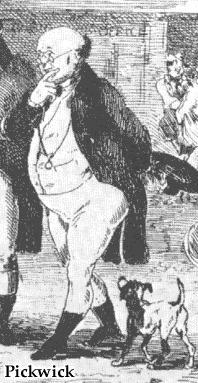
Wednesday, February 17, 2016


 Over the years I have heard many try and explain why going to church is important; or answer the question some may ask, "What do you get out of church?"
The following piece sounds the depths of why we go; he puts words to the many thoughts and affections that we feel when we join with others for worship. From the heart of a true mystic, not a simple "fast food" read, but a compelling look into the heart of the worshipper.

 "It is universally felt that devotion must sometimes quit the solitude of the cell, and forget its mere individual wants, and speak as from humanity's great heart to God.
To this house we come, my friends, drawn not by arbitrary command which we fear to disobey; not by self-interest, temporal or spiritual, which we deem it prudent to consult; not, I trust, from dead conventionalism, that brings the body and leaves the soul; but by a common quest of some holy sprit to penetrate and purify our life; by a common desire to quit its hot and level dust, and from its upland slopes of contemplation we come to inhale the serenity of God; by the secret sadness of sin, that can delay its confessions and bear its earthliness no more; by the deep though dim consciousness, that the passing weeks do not leave us where they find us, but plant us within nearer distance, and give us a more intimate view, of that fathomless eternity, wherein so many dear and mortal things have dropped from our imploring eyes. It is no wonder that in meditations as solemn as these, we love and seek each other's sympathy.
It is easy, not doubt, to journey alone in the broad sunshine and on the beaten highways of our lot; but over the midnight plain, and beneath the still immensity of darkness, the traveller seeks some fellowship for his wanderings. And what is religion, but the midnight hemisphere of life, whose vault is filled with the silence of God, and whose everlasting stars, if giving no clear light, yet fill the soul with dreams of immeasurable glory?
  There is however no necessary fellowship, as of saints, in the mere assembling of ourselves together; but only in the true and simple spirit of worship. All these occasions of devotion assume that we already have some affections to express; that we have discernment of the divine relations of our existence; that we have souls seeking to cry out in prayer, and waiting to lie down before God in tears.

The services of this place are quite mistaken by those who look on them as the means of obtaining a religion non-existent yet; who see in them only the instruments of self-discipline; who perform here no personal act of the mind, but passively wait such operation as may befall them; or who assume in their mental offerings, not the desires and emotions which they really experience, but those instead which they only ought to feel, and hope to realize at last by persevering in a false profession. The lips are to follow the heart and cannot lead it; and we are here, not to make use of God for the sake of our devotion, but to pour forth devotion for the sake of God." Martineau.  

Thursday, February 11, 2016

Self-made braggart


  "He was a rich man: banker, merchant, manufacturer, and what not. A big loud man, with a stare and a metallic laugh. A man made out of course material, which seemed to have been stretched to make so much of him. A man with a great puffed head and forehead, swelled veins in his temples, and such a strained skin to his face that it seemed to hold his eyes open and lift his eyebrows up. A man with a pervading appearance on him of being inflated like a balloon, and ready to start.

A man who could never brag enough of being a self-made man. A man who was always proclaiming, through that brassy speaking-trumpet voice of his, his old ignorance and his old poverty. A man who was the bully of humility. Dickens.

Tuesday, February 09, 2016


  In the two following quotes by Martineau and Beecher, I find many reasons we enjoy life.

 "On an ocean liner traveling to some far off destination, there were many different and interesting people; there was a family in mourning taking to their home-graves the body of a loved one. And there was one who was of rare truth and wisdom, the likes of which is seldom heard; and another person of deep faith that everyone respected; and another person of such love that all trusted her; and another with persuasive lips, from which thoughtful genius and the simplest heart poured forth the true music of humanity.

  The whole globe is a museum to those who have eyes to see. Rare plays are unfolding before every man who can read the drama of life intelligently. Not go to theaters? Wicked to see plays? Every street is a theater.
One cannot open his eyes without seeing unconscious players. There are Othellos, and Hamlets, and Lears, and Juliet’s all about us.
Be cheerful yourself, and good natured, and respectful, and every man has a secret for you worth knowing. There is a schoolmaster waiting for you behind every door. Every shopman has a look at life different from yours."


Sunday, February 07, 2016


The following passage comes from Jeremy Taylor's book titled, The Rule and Exercises of Holy Dying. It is a serious look at the shortness of life, the vanities of life and the joy and purpose of living with God: so, when death approaches, we will be prepared to face it. Now in this passage he is laying the ground-work and takes a cynical peek into the lives of many. I just love his style and his underlying humor makes me smile, without missing the lesson.


  "Life is like a bubble and some of us die before we reach seven years, but if the bubble stands the shock of a bigger drop, and outlives the chances of a child, of a careless nurse, of drowning in a pail of water, of being overlaid by a sleepy servant, or such little accidents, then the young man dances like a bubble empty and gay, and shines like a doves neck or the image of a rainbow, which has no substance, and whose very imagery and colors are fantastical; and so he dances out the gaiety of his youth, and is all the while in a storm, and endures only because his is not knocked on the head by a drop of bigger rain, or crushed by the pressure of a load of indigested meat, or quenched by the disorder of an ill-placed humor: and to preserve a man alive in the midst of so many chances and hostilities is as great a miracle as to create him...." Jeremy Taylor